
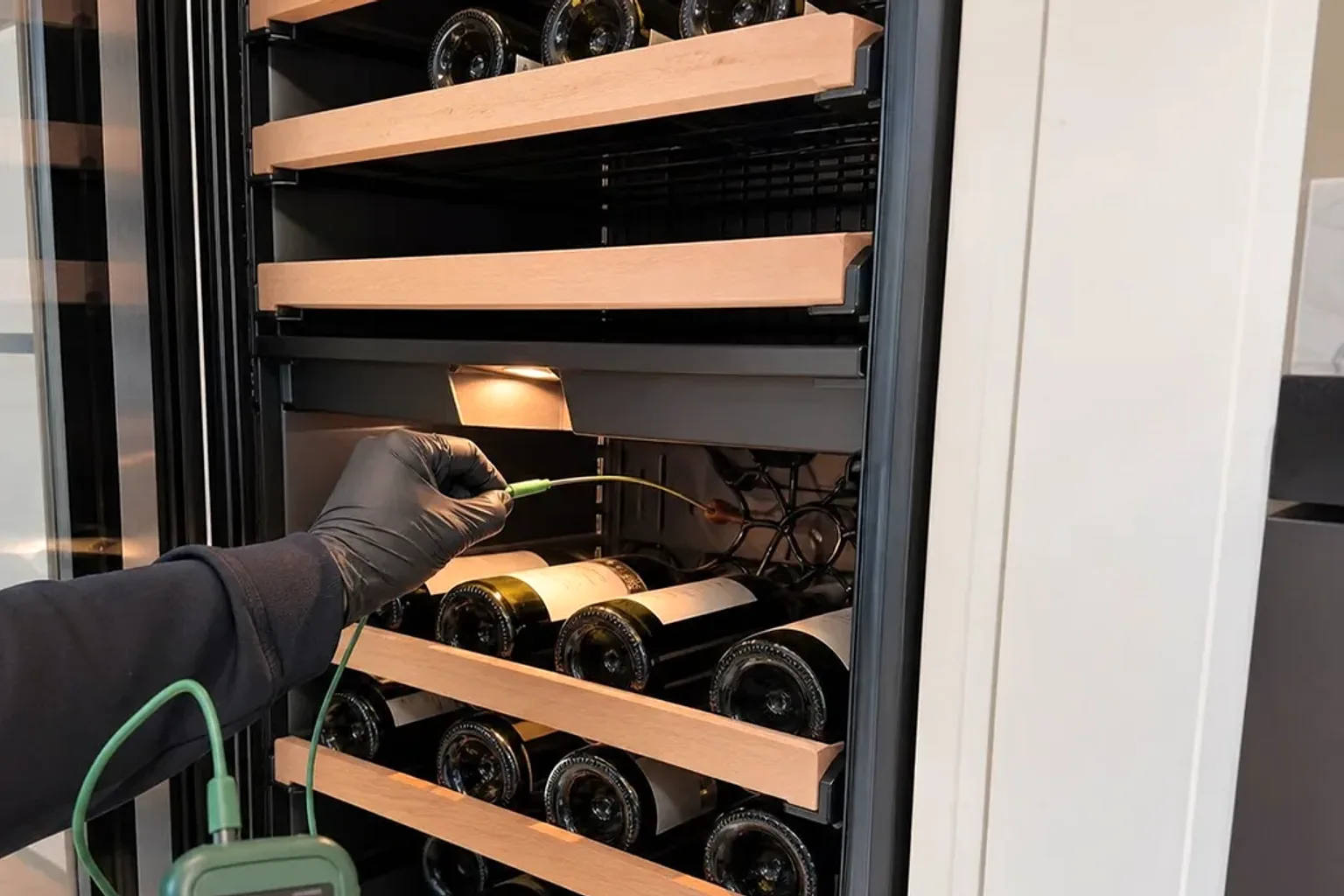
If your Sub-Zero built-in is showing an EC message or sounding a vacuum condenser alarm, the unit is telling you its condenser cannot breathe — and on Hillsborough's oak-shaded lots a coil can foul in as little as 3 to 4 months. It is one of the most common alerts we answer on estates here, and while it looks alarming on the display, it usually points to something you can address yourself before it turns into a repair. The refrigeration runs hotter than it should because airflow across the condenser has dropped, and the control board raises the flag to protect the compressor.
This guide explains what the code is really telling you, why homes here trip it faster than most, the right way to clean the grille and reset the alert without damage, and the point where the message is no longer just dust. As diagnostics lead for this area, I want you to know which is which before you spend a dime.
What the EC and Vacuum Condenser Alarm Actually Means
EC stands for a condenser fault, and on newer touch-panel models the same problem reads as a Vacuum Condenser alarm. Both point to one thing: the condenser, which sheds the heat your refrigeration pulls out of the food, is not getting enough airflow to do its job. The board watches the run pattern and condensing temperature, and when heat climbs past a safe threshold it posts the code and often chirps to get your attention.
The important part is that this is a protective warning, not a failure report. Sub-Zero built it in precisely because a fouled condenser, left alone, forces the compressor to run hot for months and shortens its life. So the alarm is doing you a favor. In most Hillsborough kitchens the cause is simply a coil that has packed with debris.
Why Hillsborough Estates Trip This Alarm Faster
Two local conditions gang up on grille-mounted condensers here. The first is pollen. The mature oak canopy that shades so many Hillsborough properties drops a heavy seasonal load of pollen and fine tree debris that drifts straight into the lower grille and settles on the coil. The second is humidity. The marine layer that rolls in off Crystal Springs carries damp air that makes that pollen and dust cling and cake rather than blow free.
Then add the scale of these homes. A large estate kitchen with a 48-inch built-in, or a dual-refrigeration column tucked into a butler's pantry, often sits in cabinetry that limits airflow to begin with. On streets around Country Club Manor and Lower North Hillsborough we routinely pull grilles coated in a felt-like mat after a single season, far faster than a normal home builds up.
How to Safely Clean the Condenser and Clear the Alarm
You can handle the common cause yourself. Start by switching the unit off at its control or the breaker, so the fan is not spinning while you work. Locate the grille, which on most built-ins runs along the top of the unit behind a snap-off or screw-down panel; on some column models it sits at the base.
With the grille off you will see the condenser coil and its fins. Vacuum the loose debris first, then work a soft appliance brush across the fins in the direction they run, lifting the packed pollen without bending them. Do not use water or a pressure sprayer. Once the coil looks clean, reseat the grille, restore power, and let the unit run. On many models the alarm clears on its own once temperatures normalize; on others you acknowledge it through the control panel. If the message stays lit after a clean coil and a full cooldown, the trouble is deeper.
When It Is Not Just Dirt
A clean condenser that still throws the EC alarm tells us the airflow or heat problem lives elsewhere. The most common culprit is the condenser fan motor. If that fan has failed or slowed, no amount of cleaning restores airflow, and the coil overheats exactly as a dirty one would. You may hear it straining, or hear nothing at all where a steady hum should be.
Less often, the alarm rides on top of a sealed-system issue. A low refrigerant charge or a struggling compressor makes the system run hot and long, and the board reads that heat as a condenser fault. These are not cleaning jobs. Telling a fan motor apart from a sealed-system fault takes measurement, not guesswork, and it is worth confirming before anyone spends on parts, because the two repairs sit at very different price points.
A Maintenance Rhythm That Fits an Estate Kitchen
Because of the pollen-and-marine-layer combination, the twice-a-year cleaning Sub-Zero suggests is a floor here, not a ceiling. On heavily wooded lots around Tobin Clark or the Carolands area, we often recommend clearing the grille every three to four months, especially through spring pollen and the foggy stretch of summer.
It helps to tie it to something you already track. Clean the coil when the clocks change and again mid-season, keep the space above and around the grille clear of stored items, and glance at the display now and then for an early flag. A household with a second kitchen or a wine-room unit should put those on the same schedule, since the ones people check least are usually the ones that alarm first. A few minutes twice a season spares the compressor years of strain.
What to Check Before You Call
Before you book a visit, note a few things that speed the diagnosis. Did the alarm clear after you cleaned the coil, or come right back? Does the condenser fan spin when the unit runs, and does the compartment still hold temperature or is it slowly warming? Is the lower or upper grille area hot to the touch?
Please do not try to silence the alarm by resetting the unit over and over or by setting it colder. Neither addresses the heat the board is reacting to, and a colder setpoint only runs a laboring system harder. There is no hidden code that fixes a failed fan or a low charge. If a real cleaning did not clear it, the honest next step is a proper diagnosis so you fix the actual fault once.