
Vetting Sub-Zero repair for a Hillsborough estate is a purchasing decision, not an emergency phone call: inventory the fleet, ask 3 multi-unit questions, hold the paperwork, and run the fleet math before anyone joins an approved-vendor list. That is a different job than picking a repairman for one refrigerator, because an estate kitchen rarely holds one. Three to five Sub-Zero units is the norm at this altitude of house: a main built-in, a 700-series pantry column, a wine unit off the dining room, and outdoor drawers by the pool.
Do that work on a calm Tuesday rather than at 6 a.m. with a warm freezer and a party that night. What follows is the file itself, and what the whole fleet actually costs to keep running for another decade.
Start with the fleet inventory, not the shortlist
An inventory sheet beats a phone call. Walk the house once with a camera and photograph every model and serial tag: the main built-in's behind the upper grille, the column's inside the fresh-food door near the hinge, the wine unit's on the lower frame, the outdoor drawers' under the top drawer. Four photographs turn a vague request into a quotable job. Those tags decide everything downstream, because a 500-series unit left from a 1990s remodel and a current 700-series column share a badge and almost nothing else: different compressors, different boards, different parts availability. Hillsborough houses around Tobin Clark and Carolands commonly mix eras exactly this way, one survivor from the original kitchen and three from a later renovation. Any company that quotes a number before asking for a tag is quoting a fantasy.
Which questions matter when four units share one vendor?
Fleet questions differ from single-appliance questions. Ask three things a one-refrigerator household never needs to ask. First, does the same technician return, or does the company rotate whoever is free, so the wine unit's history dies after every visit? Second, will they keep a written record per serial number, so a pantry column's second board failure in three years is visible instead of forgotten? Third, is a second unit examined during the same appointment priced differently from a separate trip, given that on a one-acre lot the drive is most of the overhead? A company that has run estate work answers all three crisply. A company that hears four units and repeats one flat number has not.
Can one company cover refrigeration, wine, and outdoor drawers?
Coverage breadth is a fair filter with real limits. Sub-Zero wine storage and outdoor drawer units are refrigeration with different failure habits: a wine cabinet lives or dies on a two to three degree band and a quiet compressor, while outdoor units run their condensers through oak pollen, marine-layer damp off Crystal Springs, and afternoon heat no indoor cabinet ever sees. A refrigeration technician who works all three recognizes the pattern; a generalist who mostly turns over dishwashers usually does not. Ask which of the four units on your sheet the company services routinely, and treat an honest not that one as a good sign rather than a failure.
What paperwork belongs in the file before anyone enters?
Documentation is the part household managers already know and vendors often forget. Hold three items: a current certificate of insurance naming the property, supplied on request rather than promised; a W-9 if the household pays vendors directly; and a written scope per visit stating findings, readings, and the part to be ordered before any money moves. Add the operational line most estates care about most: who exactly is coming, and whether that person is an employee or a subcontractor the company met that morning. Gate access, cabinet protection, and the order of operations on a panel-ready installation are a separate subject, covered on our estate protocol and service prep pages rather than repeated here. A competent company fills this file in one pass, without a scramble.
Fleet math: what keeping every unit alive actually costs
The arithmetic ends most replacement conversations. A Hillsborough property running four Sub-Zero units should expect roughly one to two service events a year across the whole fleet, not per unit. On this site's published ranges a diagnostic visit is $195-$285 and is credited toward an approved repair, and common fixes land between $310 and $1,450: a door gasket and frost line at $520-$1,150, an ice maker or water line at $310-$985, a fan motor at $365-$815, a thermistor at $260-$565. Two of those in twelve months is a boring, normal year for a four-unit house. Replacing a single built-in instead is a figure nobody can quote over the phone, because on a custom installation the appliance is the cheap part: panels, trim, opening changes and schedule coordination sit outside any appliance quote, and a special-order panel-ready cabinet arrives on the manufacturer's timetable, not the household's. In the fleet I see across Hillsborough, a sound repair buys another 5 to 10 years. That asymmetry, not brand loyalty, is why estate fleets stay in service. Asking any company to walk all four units in one appointment is reasonable, and that includes asking us.
When replacement is the honest call
Replacement wins in a narrow set of cases, and a vendor who never concedes one is selling. Sealed-system failure at the far end of the 15-25 year window is the clearest: the work is legitimate at $1,850-$4,400, and on a machine that old the neighboring parts are already queued behind it. Discontinued hardware on early 500-series units is the second case, where the unit cools perfectly but a cracked liner or an unobtainable door bracket cannot be sourced at any price. The third is any unit that has already absorbed two major repairs inside eighteen months. Everything else on a 600-series or 700-series cabinet under two decades old is arithmetic that usually favors keeping it. Our repair versus replace page runs that comparison unit by unit.
How a standing relationship changes the estate's year
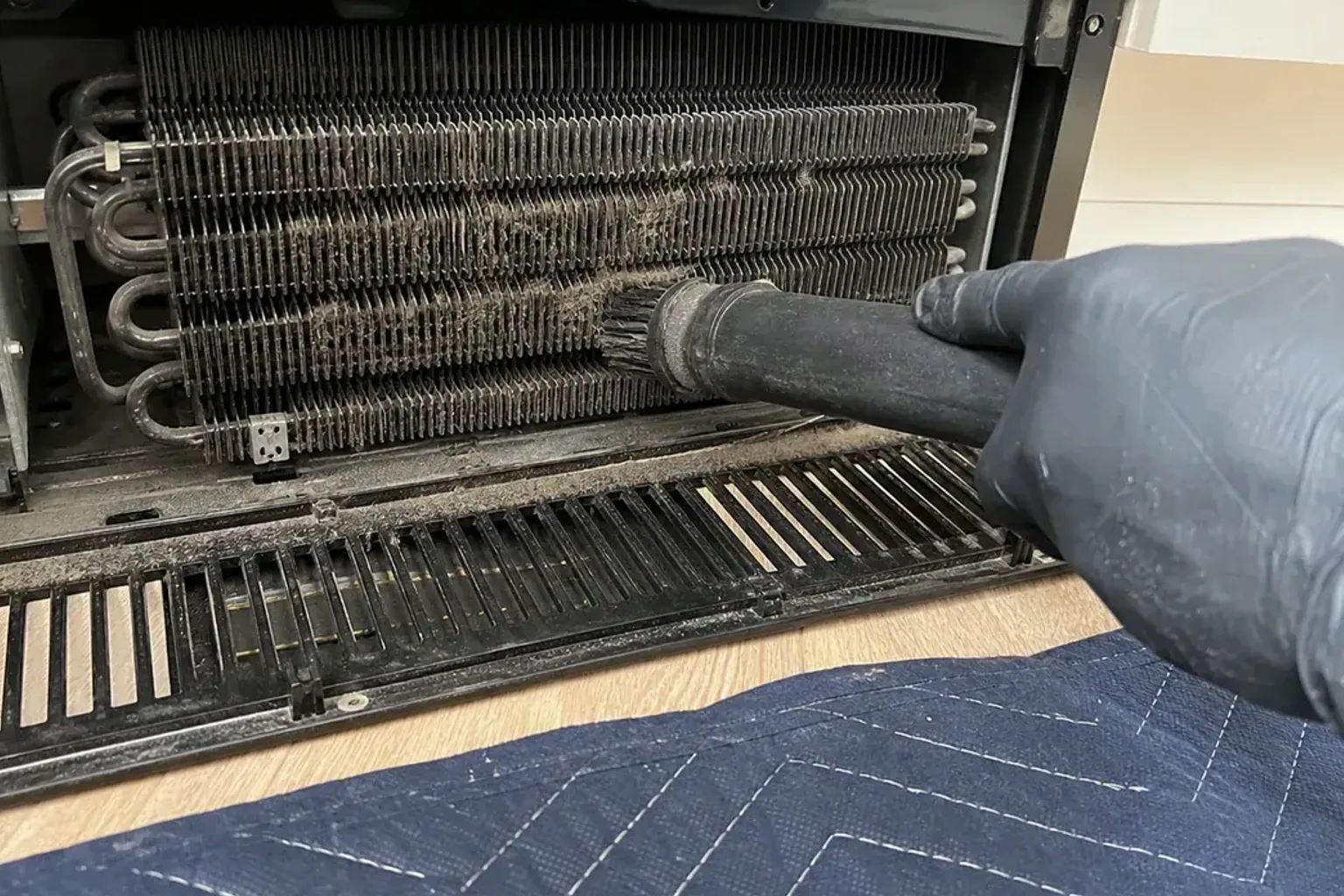
A booked spring walk-through beats an emergency scramble for one unglamorous reason: scheduling. Condensers get cleaned before the pollen and the first 90-degree week arrive together, the wine cabinet before a summer of parties, the outdoor drawers before they are needed daily. The same appointment catches the cheap version of expensive failures, such as a gasket beginning to frost at $520-$1,150 now instead of a compressor laboring against a warm cabinet in August. Households that call only when something is already warm pay identical rates at worse moments, on the fleet's timetable rather than their own.