Picture a Hillsborough homeowner reaching into a built-in Sub-Zero one August evening and finding the ice cream soft while the fresh-food shelves below still hold a crisp 38 degrees. That split reading, a freezer drifting toward 20 degrees while the refrigerator stays cold, is the clearest fingerprint of Sub-Zero's dual-refrigeration design, and it usually points a diagnosis toward one sealed system rather than the whole appliance. Sub-Zero built-ins run two independent refrigeration circuits: a dedicated compressor and evaporator for the freezer, and a separate pair for the fresh-food cabinet. Because those systems never share cold air, a warm freezer alone rarely means the refrigerator side has failed. A grounded diagnostic visit on a San Mateo estate built-in starts at $195, credited toward an approved repair, and the technician's first task is deciding which of the two systems is misbehaving. This guide walks the recurring scenes Hillsborough owners describe, so a symptom you can see starts to name its own cause.
What Is Dual Refrigeration in a Sub-Zero, Really?
Most household refrigerators cool a single box and bleed a little of that cold into a freezer compartment through a shared duct and damper. Sub-Zero built-ins abandon that shortcut. Each Sub-Zero uses two complete sealed systems, meaning two compressors, two condensers, and two evaporators, so the freezer and the fresh-food cabinet are chilled by separate machinery. One circuit holds the freezer near 0 degrees; the other keeps the refrigerator around 38 degrees without ever mixing their air. That separation explains why a Hillsborough owner can lose freezing power while the produce drawers stay perfectly cold. Two circuits also means two of everything can wear: two fan motors, two defrost paths, and two temperature sensors, each failing on its own timeline.
Why Does a Warm Freezer Not Always Mean the Fridge Is Failing?
Consider the most common call a San Mateo built-in generates: the freezer feels warm, and the owner assumes the entire Sub-Zero is dying. Under dual refrigeration, that assumption is usually wrong. Because the freezer runs on its own compressor and evaporator, a warm freezer points to that circuit alone, a frosted-over evaporator or a stalled freezer fan, while the refrigerator's separate system keeps humming near 38 degrees. The opposite scene happens too, a fresh-food cabinet creeping toward 50 degrees while the freezer still makes ice, which isolates the fault to the refrigerator circuit instead. Reading which compartment failed narrows a diagnosis to one sealed system before a technician opens a panel. A control-board or sensor diagnosis on these units runs $395 to $1,450 depending on the board revision.
How Does Dual Refrigeration Keep Hillsborough Food Fresh Longer?
Freezer air is bone-dry, and in a conventional fridge that dry air gets pushed into the fresh-food section, pulling moisture out of produce and shortening its life. Sub-Zero's dual design keeps the freezer's dry air sealed inside the freezer, so the refrigerator cabinet holds a higher, steadier humidity that keeps lettuce and herbs crisp for days longer. The split also blocks flavor and odor transfer, since the two air spaces never meet. For a Hillsborough estate kitchen stocking fresh ingredients, that preserved humidity is the payoff owners feel long before they think about the machinery behind it.
Which Symptoms Point to the Freezer System Versus the Fridge System?
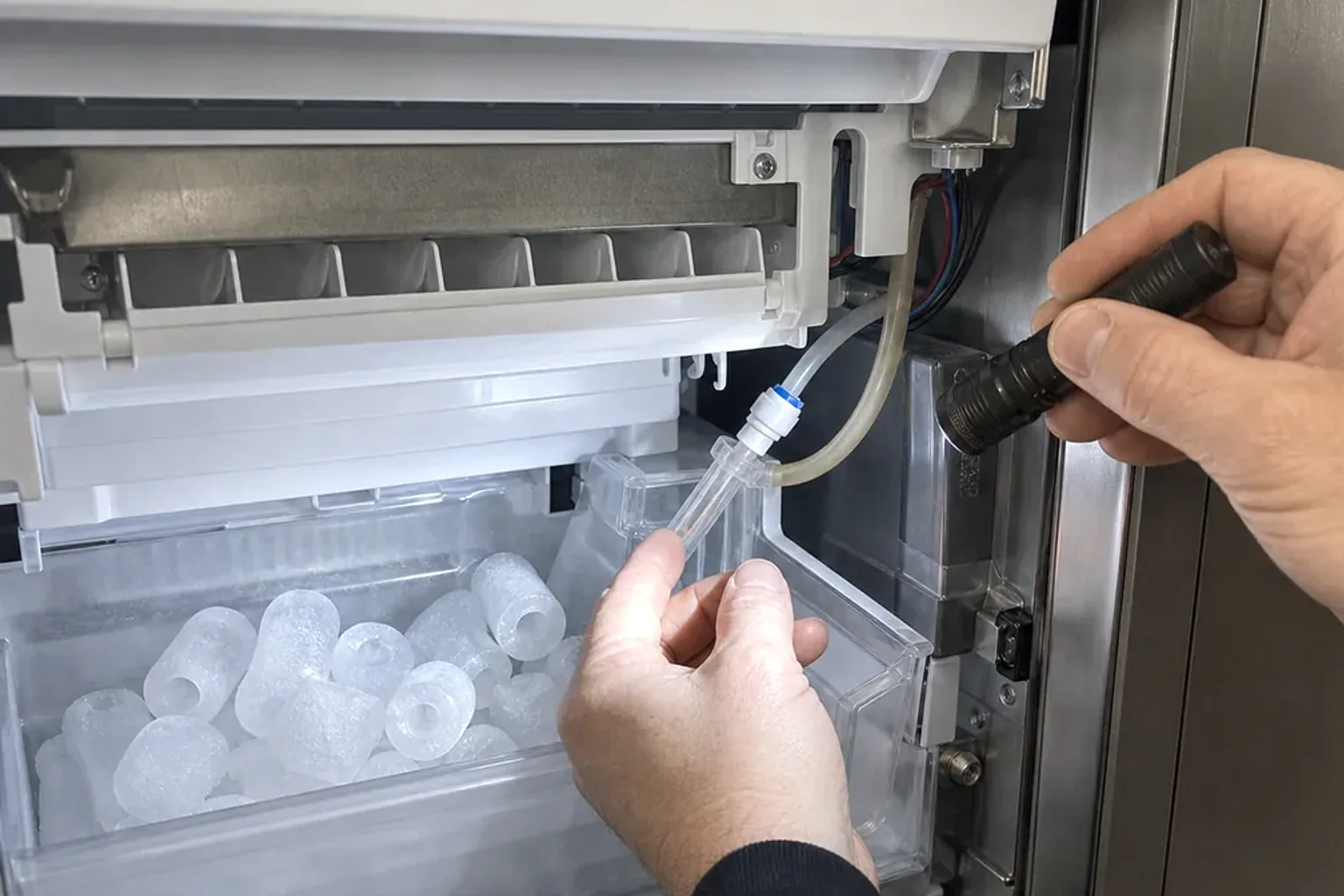
Sorting a symptom to the right circuit means noticing what stayed cold. A Sub-Zero freezer that frosts heavily on its back wall and then warms usually has a freezer-side evaporator or defrost problem, not a refrigerator fault. A fresh-food cabinet that sweats or grows a frost line often traces to a tired door gasket letting humid room air leak past, and a gasket and frost-line repair on a Hillsborough built-in falls in the $520 to $1,150 range. Ice that stops while both compartments hold temperature usually isolates to the ice maker or water line, a repair from $310 to $985. Warm spots in only the freezer with weak airflow instead point to a freezer evaporator or condenser fan motor, running $365 to $815.
What Do Sub-Zero Error Codes Tell You About Each System?
Owners searching for a Sub-Zero error code list are usually staring at a flashing panel and hoping the message names the culprit. On a dual-refrigeration built-in, the codes and alarms do roughly that, telling you which of the two systems raised its hand. A vacuum-condenser or EC alarm points toward the condenser and sealed-system side, while a temperature alarm on only the freezer display flags the freezer circuit rather than the refrigerator. A high-temp warning that clears after a door was left open is not a system failure at all, just the appliance honestly reporting a cause you can fix. Writing down the exact code, and noting which compartment shows it, hands a technician a head start. A temperature sensor or thermistor replacement, a frequent code source, sits in the $260 to $565 band once confirmed.
When Does a Two-System Symptom Actually Need a Technician?
Some dual-refrigeration symptoms are safe to observe for a day, and others should not wait. A single warm compartment that recovers after a defrost cycle is worth watching before booking anything. A freezer or refrigerator that climbs and stays warm for hours, hums constantly without cooling, or trips its breaker points to a sealed-system or electrical fault that belongs with a technician. Compressor and sealed-system work on Hillsborough estate built-ins is the costliest category, running $1,850 to $4,400, because recovering refrigerant and proving the repair takes specialist tools. Booking a $195 diagnostic first, credited toward an approved repair, buys a grounded reading of which system failed, and on Lower or Upper Hillsborough units that clarity often changes the repair-versus-replace math.
How Do Estate Built-Ins Stress Two Sealed Systems Differently?
Large Hillsborough estate kitchens ask more of both sealed systems than a smaller home does. A built-in tucked into a tight custom cabinet on a Tobin Clark or Carolands property runs its condensers against restricted airflow, and a dust-caked condenser makes the compressor work harder on whichever circuit it serves. Because the two circuits age independently, one system may need attention years before the other, so an owner who replaced a freezer fan should not assume the refrigerator compressor is on the same clock. Keeping condenser grilles clean and gaskets sealed lets each system carry only its own load, the quiet reason these built-ins outlast the kitchens around them.