
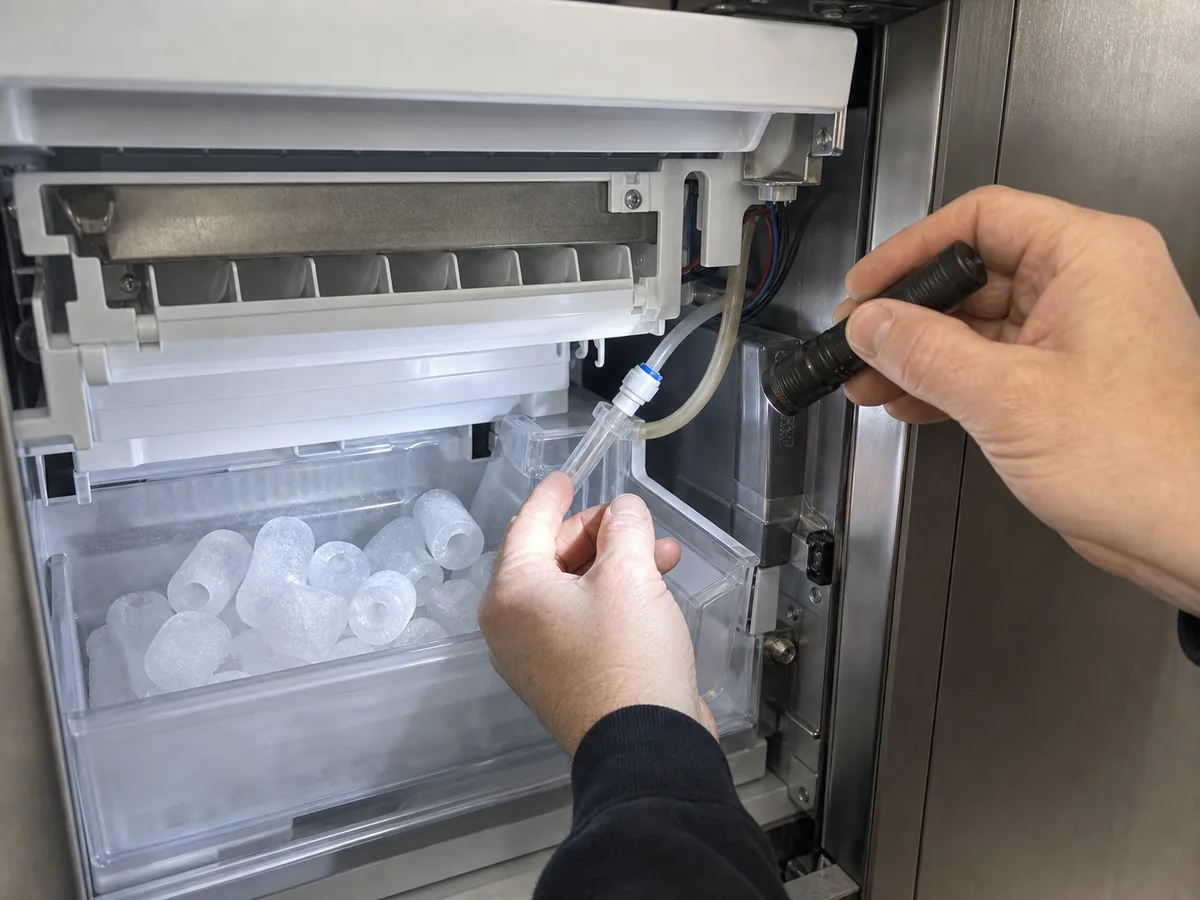
A puddle in front of a Sub-Zero is alarming partly because a built-in is so tightly fitted that you cannot just pull it out and look. The water has to be coming from somewhere inside or behind the cabinet, and the trick is that the four common sources each leave a slightly different signature. Read the water — clean or icy, constant or only after the dispenser runs, front-edge or rear — and you can usually name the cause before a technician ever arrives.
This page is deliberately a diagnostic, not a repair instruction, because "leaking water" covers several unrelated faults. Two of them you can address in minutes; two of them need service. Either way, the first job is the same: protect the floor and stop the water.
Why a small leak is a big deal in Hillsborough
In most homes a refrigerator leak onto tile or vinyl is a wipe-up. In the homes we serve it rarely is. Hillsborough kitchens are typically finished in wide-plank rift-and-quartered oak, reclaimed French oak, limestone or honed marble — surfaces that water cups, stains or delaminates. A built-in refrigerator sits flush with the surrounding cabinetry, so water doesn't pool out in the open where you'd catch it; it runs back and under, into the cabinet base and toward the subfloor, often unseen until a board lifts or a stone darkens.
The geography adds a second wrinkle. On the one-acre-plus lots that define much of Hillsborough, the ice-maker water line is frequently a long run — teed off a manifold in a basement mechanical room, a utility closet or even a separate wing — rather than a short hookup under the sink. A slow drip anywhere along that run can show up as water at the appliance, and the shut-off you need may be a room or a floor away. Knowing where your valve is, before you need it, is genuinely worth doing.
Find the source, step by step
Move through these in order. The first two steps are about damage control; the rest narrow down the cause.
- Protect the floor first. Before any diagnosis, slide towels or a shallow tray under the leak and lift anything that water can wick into. On the wide-plank hardwood and limestone floors common in Hillsborough kitchens, a slow leak that sits overnight is far more expensive to deal with than the appliance fault itself.
- Shut the water supply off. If the unit has an ice maker or dispenser, find its shut-off — usually a small saddle or quarter-turn valve in the basement, a utility room, or a cabinet on a long run from a remote manifold. Closing it stops a water-line leak immediately and rules the water line in or out as the source.
- Decide whether the water is clean or icy-cold. Clean, room-temperature water that pools at the front edge usually means a blocked or frozen defrost drain backing up inside. Water tied to ice production or that appears only after the dispenser is used points to the water line, inlet valve or filter housing instead.
- Check the filter housing and connections. On units with an internal water filter, look for drips around the filter head — a cartridge that was cross-threaded or seated on an old O-ring is a frequent, easily missed source. Re-seat a loose filter and watch whether the drip stops.
- Inspect the drain area for a frozen plug. If you can safely reach the lower rear interior, look for a sheet of ice over the drain trough. A defrost drain that freezes shut sends melt water forward and out the door instead of down and away — the single most common cause of a clean puddle.
Matching the water to the cause
A clean, room-temperature puddle that keeps returning even with the water supply shut off is almost always a frozen or clogged defrost drain backing up inside the cabinet — an internal repair, not a plumbing one. Water that appears only when ice is made or the dispenser is used, or that stops the moment you close the supply valve, points to the ice maker and water-line path: a cracked line, a weeping inlet valve, or loose fittings. A drip localized to the water filter head is usually a filter that was cross-threaded or seated on a tired O-ring. And persistent interior condensation that runs out the door is the one leak that does trace back to a worn seal, in which case the door gasket replacement page is the right next read.
When to call instead of chase it
If you have shut the supply off and protected the floor but water keeps appearing, the source is internal — a defrost drain or a sealed-component issue that needs the cabinet opened up by a technician. Given the flooring at stake, this is one symptom where it is worth acting quickly rather than watching it for a week. Have your model number and a note of where the water shows up ready when you call; the model number guide shows where to find it. For larger or staffed properties, the estate service protocol covers floor protection and access during the visit.